
Building Survey in Allerton, Liverpool (L18): What Buyers Need to Know
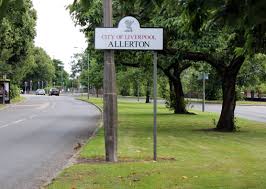
Allerton is one of south Liverpool's most popular residential areas, and it's easy to see why. With tree-lined streets, Calderstones Park on its doorstep, well-regarded schools, and the independent shops and restaurants along Allerton Road, it attracts buyers who want a settled, well-connected suburb within easy reach of the city centre. Properties here range from Victorian and Edwardian terraces and semis through to 1930s detached houses and more modern infill developments.
With that range of housing stock — and with properties in L18 often commanding a premium — getting the right survey before you buy is one of the most important steps in the process. Here's what you should know.
The Housing Stock in Allerton (L18)
Allerton's housing stock reflects its development across several decades of the late 19th and early 20th centuries, with later additions on former garden plots and through small-scale redevelopment.
Victorian terraces are found in the parts of Allerton closest to the city, typically dating from the 1880s and 1890s. These are solid, well-built properties but they are now well over 100 years old, and the issues associated with that age — no original damp proof course, ageing roofs, outdated services — need to be properly assessed before purchase.
Edwardian semis are among the most common property type in the area, particularly in the streets around Allerton Road and towards Calderstones. These larger, bay-fronted semis were built in the early 1900s and offer generous room sizes and period character. Many have been extended, altered, or updated over the decades, and the quality of that work varies considerably.
Inter-war detached and semi-detached houses, built mainly in the 1920s and 1930s, are well represented in Allerton, particularly towards the Calderstones and Gateacre ends of the area. These properties are typically more structurally straightforward than Victorian stock but still carry age-related considerations, including cavity wall construction from that era, flat roof extensions added subsequently, and services that may be original or partially upgraded.
Post-war and modern properties also feature in L18, including some small developments and infill plots. These generally present fewer structural concerns but benefit from professional assessment nonetheless.
What Surveyors Commonly Find in L18 Properties
Survey work carried out in Allerton and the wider L18 area regularly identifies the following categories of defect.
Damp is a consistent finding in the area's older properties. Victorian properties without a damp proof course are susceptible to rising damp, while penetrating damp from defective pointing, failed rainwater goods, and poorly maintained chimney stacks is common across both Victorian and Edwardian stock. Identifying the source and extent of moisture is an important part of any survey.
Extensions and loft conversions are very common in Allerton, where larger semi-detached properties have been popular candidates for kitchen extensions and additional bedrooms. Work carried out without building regulation approval, inadequate structural support, cold roof loft conversions, and poorly detailed flat roofs on single-storey extensions are regularly identified. Where work has been carried out, checking for the appropriate consents and assessing quality of construction is essential.
Chimney stacks and roofs require careful inspection on older Allerton properties. Original slate roofs are typically at or beyond their expected life, and the replacement roofs fitted at various points over the years vary significantly in quality. Chimney stacks on Victorian and Edwardian properties can show pointing failure, spalling brickwork, and defective flashings — all of which can lead to water ingress.
Timber defects, including woodworm and wet rot in floor joists, window frames, and roof timbers, are a recurring finding in the older housing stock. These range from minor cosmetic issues to defects requiring significant remediation.
Wall tie failure can affect cavity-wall properties built from the 1920s onwards. Early cavity wall construction used iron wall ties which are susceptible to corrosion, and where failure occurs it can cause horizontal cracking and instability in the outer leaf of brickwork. This is an issue worth specifically investigating on inter-war properties in the area.
Which Survey Do I Need for an Allerton Property?
For the Victorian and Edwardian properties that make up a large proportion of Allerton's most desirable housing, a RICS Level 3 Building Survey is the appropriate choice. The Level 3 is the most comprehensive inspection available — it assesses construction, condition, defects, and their likely causes, and provides clear recommendations on remediation. Given the age, complexity, and value of many L18 properties, this is the right level of scrutiny.
A RICS Level 2 Homebuyer Survey may be suitable for post-war or modern properties in good condition that have not been significantly altered. If you are unsure which survey is right for the property you are buying, get in touch and we will be happy to advise based on the property's age, type, and condition.
Get in Touch
JGL Associates are a RICS regulated firm based in West Derby, Liverpool. Our surveyor is a Chartered Building Engineer and RICS registered surveyor providing independent building surveys across Allerton, L18, and the wider Merseyside area.
To arrange a building survey in Allerton or to discuss your requirements, contact us today. You can also read our guide to whether you need a survey or find out more about our survey types.