
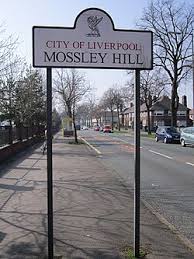
Building Survey in Mossley Hill, Liverpool (L18): What Buyers Need to Know
Mossley Hill is one of Liverpool's most distinguished residential suburbs. Sitting in the south of the city within the L18 postcode, it is characterised by wide, leafy streets, generous plot sizes, and some of the most substantial Victorian and Edwardian housing in Merseyside. For buyers seeking space, architectural quality, and a quiet suburban setting within easy reach of the city centre, Mossley Hill is consistently among Liverpool's most desirable addresses.
That desirability is reflected in property values — and in the importance of getting a thorough, independent survey before committing to a purchase. Here's what buyers in Mossley Hill should know.
The Housing Stock in Mossley Hill (L18)
Mossley Hill developed primarily during the late Victorian and Edwardian periods, and the area retains much of its original character. The housing stock here tends to be larger and more substantial than in many other Liverpool postcodes, which brings both architectural appeal and specific survey considerations.
Late Victorian properties in Mossley Hill are often substantial detached and semi-detached villas, dating from the 1880s and 1890s. These are well-built properties with generous room proportions, bay windows, and original period detailing — but they are now more than 130 years old, and their age brings with it a range of structural and maintenance considerations that require careful professional assessment.
Edwardian properties form the backbone of Mossley Hill's housing stock, built from around 1900 to 1914. Many of these are large detached houses or substantial semis with extended rear additions, garages, and mature gardens. The quality of construction is generally high, but the properties have inevitably been subject to various alterations, extensions, and updates over more than a century, and the condition and quality of that work varies significantly.
Inter-war properties are also present in parts of Mossley Hill, particularly towards its boundaries with Allerton and Childwall. These 1920s and 1930s houses tend to be more structurally straightforward but are not without their own survey considerations.
Converted flats and apartments in Mossley Hill often occupy former large houses that have been divided into multiple units. These present specific survey considerations, including the condition of shared structural elements, the quality of conversion work, fire separation, and the state of communal areas.
What Surveyors Commonly Find in Mossley Hill Properties
Survey work in Mossley Hill regularly identifies the following categories of defect, particularly in the older and larger properties that define the area.
Damp and moisture penetration is a common finding. Large Victorian and Edwardian properties often have multiple chimney stacks, extensive areas of external brickwork, and original rainwater disposal systems — all of which require ongoing maintenance and are regular sources of water ingress when not properly maintained. Rising damp in older properties without a damp proof course is also regularly encountered.
Roof structures on Mossley Hill's larger properties can be complex, with multiple pitches, valleys, dormers, and flat sections over extensions. Original slate roofs are typically well beyond their expected life, and replacement roofs vary in quality. Flat roof sections on rear extensions and outbuildings are a frequent source of defects.
Extensions and alterations are very common on the larger houses in the area, and the quality and compliance of this work requires careful scrutiny. Rear extensions, loft conversions, garage conversions, and basement works have all been carried out on Mossley Hill properties over the decades — some with full building regulation approval, some without. Assessing the structural integrity and condition of these additions is an important part of any survey.
Services and drainage in larger Victorian and Edwardian properties may be original or have been upgraded in parts over the years. The overall condition and specification of electrical installations, plumbing, heating systems, and drainage should form part of the survey assessment, with specialist investigation recommended where required.
Structural movement in the form of cracking to internal plasterwork and external brickwork should always be properly assessed in properties of this age. While some movement is historic and stable, other cracking can indicate active settlement or structural issues requiring further investigation.
Which Survey Do I Need for a Mossley Hill Property?
For the Victorian and Edwardian properties that characterise Mossley Hill, a RICS Level 3 Building Survey is the appropriate choice — and given the size, value, and complexity of many properties in L18, it is arguably more important here than almost anywhere else in Liverpool. The Level 3 is the most comprehensive survey available, providing a detailed assessment of construction, condition, defects and their causes, and clear recommendations on remediation and further investigation.
A RICS Level 2 Homebuyer Survey may be suitable for post-war properties in good condition, or for modern apartments, where the construction is more straightforward. If you are uncertain which level of survey is right for your property, contact us and we will advise based on the property's age, type, and condition.
Get in Touch
JGL Associates are a RICS regulated firm based in West Derby, Liverpool. Our surveyor is a Chartered Building Engineer and RICS registered surveyor providing independent building surveys across Mossley Hill, L18, and the wider Merseyside area.
To arrange a building survey in Mossley Hill or to discuss your requirements, contact us today. You can also read our guide to whether you need a survey or find out more about our survey types.