
Damp Problems in Liverpool Properties: What Your Surveyor Looks For
Damp is one of the most common problems found in Liverpool properties — and one of the most misunderstood. Whether you're buying a Victorian terrace in Aigburth, a 1930s semi in Crosby, or a city centre flat, damp can affect properties of all ages and types. Left untreated, it can cause structural damage, destroy finishes and fittings, and create unhealthy living conditions.
As a RICS regulated building surveying firm based in Liverpool, JGL Associates deal with damp-related issues in properties across Merseyside on a regular basis. Here's what you need to know.
The Three Main Types of Damp
Rising Damp
Rising damp occurs when moisture from the ground travels upwards through the walls of a building via capillary action. It is most common in older properties — particularly Liverpool's large stock of Victorian and Edwardian terraces — which were built without a damp proof course, or where the original damp proof course has failed or been bridged.
Signs of rising damp include a characteristic "tide mark" of staining on lower walls, salt deposits (efflorescence) on wall surfaces, peeling wallpaper or paint at low level, and a musty smell. Rising damp rarely travels higher than around one metre up a wall.
It's worth noting that genuine rising damp is actually less common than is often suggested. Many cases diagnosed as rising damp are in fact condensation or penetrating damp. This is why an independent assessment from a qualified surveyor is so important — a poor diagnosis leads to ineffective (and expensive) treatment.
Penetrating Damp
Penetrating damp, also known as lateral damp, occurs when water enters a property horizontally through the external fabric of the building — walls, roofs, windows, or floors. It can affect properties at any level, not just at ground floor.
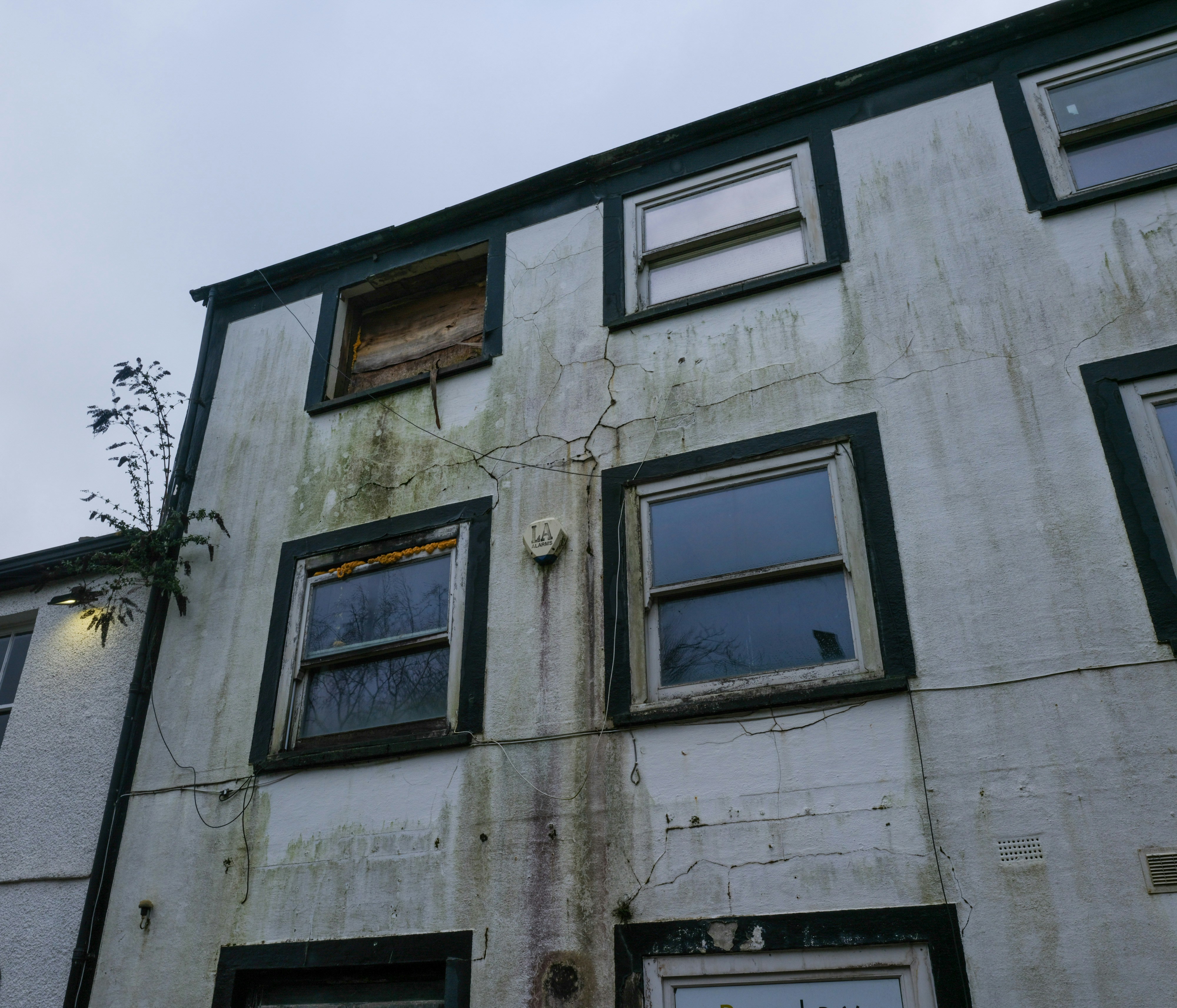
Common causes include defective or missing pointing in external brickwork, cracked render, failed window or door seals, blocked or overflowing gutters, leaking roofs, failed flashings around chimney stacks, and defective flat roofs. In Liverpool, where properties are regularly exposed to heavy rainfall and driving westerly winds, penetrating damp is a very common finding.
Unlike rising damp, penetrating damp tends to appear in patches corresponding to the location of the defect causing it, rather than uniformly across the lower sections of a wall.
Condensation
Condensation is by far the most common form of damp in UK properties and is particularly prevalent in Liverpool's older housing stock. It occurs when warm, moisture-laden air meets a cold surface and water vapour condenses into liquid. In properties, this typically appears on cold external walls, in corners, around windows, and in poorly ventilated spaces like bathrooms and kitchens.
Condensation can lead to mould growth, which poses health risks, particularly for those with respiratory conditions. It is often exacerbated by modern improvements to draught-proofing and insulation that reduce natural ventilation without providing adequate controlled airflow.
Identifying condensation versus other forms of damp requires experience and the right diagnostic tools — and getting the diagnosis right matters enormously when it comes to choosing the appropriate solution.
How Does a Surveyor Identify Damp?
During a building survey, a surveyor will carry out a thorough visual inspection of the property, looking for the telltale signs of each type of damp described above. This includes examining internal wall surfaces, ceilings, floors, and structural timbers, as well as inspecting the external fabric of the building for defects that could be causing or contributing to moisture ingress.
Surveyors also use electronic moisture meters to measure moisture levels within walls and other building elements. These provide useful data but must always be interpreted carefully alongside the visual inspection — a high moisture reading can result from a number of different causes, and jumping to conclusions can lead to misdiagnosis.
Where significant damp is identified, a surveyor will advise on the likely cause, the extent of any damage caused, and the appropriate remediation approach. In some cases, further specialist investigation may be recommended — for example, from a structural engineer or specialist damp contractor — before committing to a purchase.
What Should I Do if Damp is Found in a Survey?
Don't panic. Damp is very common in Liverpool properties, particularly older ones, and most cases can be effectively treated. The key steps are:
Get the diagnosis right — Make sure any specialist you engage properly investigates the cause before recommending treatment. Be cautious of damp-proofing companies that diagnose rising damp on the basis of a moisture meter reading alone and immediately recommend expensive chemical injection treatments. Always get an independent assessment first.
Get remediation costs estimated — A surveyor can provide guidance on approximate costs for rectification work, which you can then use to negotiate on the purchase price.
Consider the bigger picture — Minor damp issues don't necessarily mean you should walk away from a property. With the right treatment and any underlying defects rectified, most properties can be made perfectly sound.
Talk to a RICS Regulated Liverpool Surveyor
JGL Associates are a RICS regulated building surveying firm covering Liverpool and Merseyside. If you're buying a property and concerned about damp, or if you're an existing owner dealing with a damp problem and want an independent professional assessment, we can help.
Our Level 3 Building Survey and Level 2 Homebuyer Survey both include a thorough assessment of damp and moisture issues. Contact us today for a no-obligation quote.